BNBU Students Prepare for University Study with EEP
The jump from high school to a fully-English teaching environment at university can pose challenges for students at BNBU. To prepare first-year students with practical skills and strategies before their first official week of classes, the Centre for Foreign Languages (CFL) provided its annual English Enhancement Programme (EEP) from 27 to 31 August, 2026.
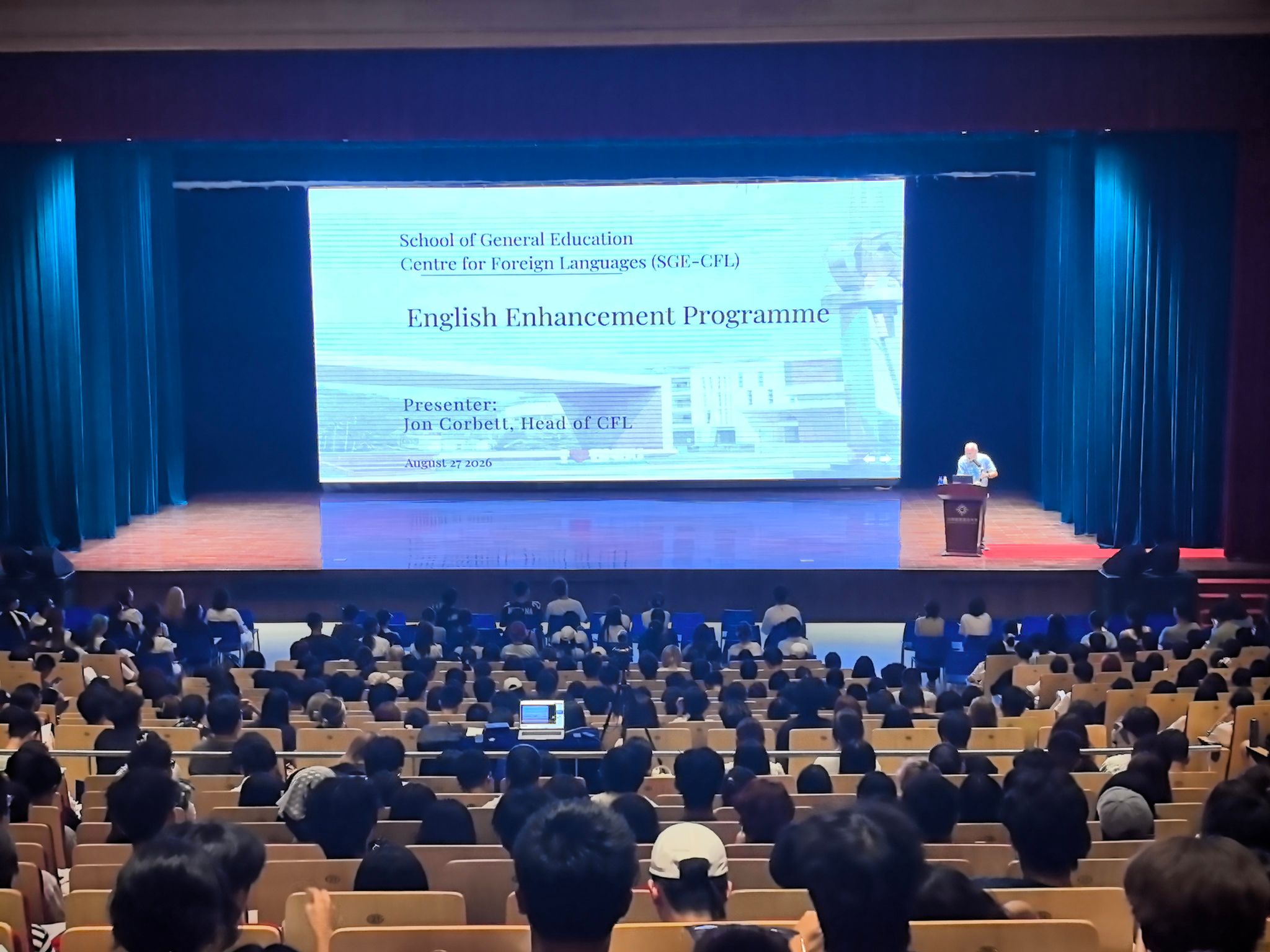
This year, about 2,600 freshmen students participated in the EEP. After being introduced to the EEP through a welcome meeting, they were offered sessions in six study areas to boost their skills and confidence for English study: Academic Reading, Academic Writing, Academic Speaking, Academic Listening, Critical Thinking and Academic Vocabulary. There was also a Warm-Up Class to prepare students for the week of classes, and a Closing Session to allow them to reflect on the key learnings gained. These sessions, in which students learned academic study methods through activities, were supported by over 40 teachers.

Reflections from Teachers
Ms. Zahra Benmeka (Academic Speaking): The speaking component of the English Enhancement Programme (EEP) plays a vital role in helping students make a smooth transition into an all-English communication environment. Beyond improving language fluency, it strives to equip learners with the confidence and clarity needed to actively participate in class.
Ms. Rowan-Holly Menzies McCaffery (Critical Thinking): The EEP Critical Thinking class aims to enhance students’ skills in analysis and introduces them to the process of evaluation academic sources.
Mr. Emilio Miguel Castano Alonso (Academic Listening): Through the Academic Listening sessions offered in EEP, students can grasp what types of listening they are expected to face during their period of studies in university, as well as how they should prepare for all sorts of listening assessments and activities in an academic context.
Ms. Lily Lili Liu (Academic Vocabulary): My teaching of Academic Vocabulary centers on team-based competitions, which have proven highly effective in building freshmen’s teamwork abilities within a dynamic, interactive setting. Complementing this engagement, I incorporate key linguistic elements – English word formation, loanwords, and abbreviations – to intentionally raise their awareness of cross-cultural studies and the global nature of academic English.
Mr. James Spurgeon Budrow (Academic Writing): Teaching Academic Writing in EEP showed me that my real reward isn’t seeing students write flawlessly, but in quiet steady growth – watching hesitant students find their footing, gain confidence, and realise that academic English wasn’t an impossible barrier, but a skill they could actually master with time and confidence.
 |  |
 |
Beyond EEP
Now that the EEP has concluded, the CFL will offer continuous English development to students both through formal classes, and through Student English Learning Hub (SELH) programmes: the English Speaking Corner, Writing/Speaking Assistance Programme (WAP/SAP), the Student English Support Programme (SESP), and more.
This year’s English Enhancement Programme continued to show the benefits of the initiative through providing vital skills to all students, helping everyone to succeed and flourish throughout their university careers.
 |  |
By Mr. Vincent Otterbeck, Ms. Sammi Tan
Photos by 2026 EEP student helpers & MPRO